Vision is the original Vision, and VisionQuest’s “Immolation” finally makes him say it out loud. Episode 7 spends most of its runtime inside Vision’s head, where the first synthetic man forces him to look in a mirror, and then ends by handing Jocasta, Ultron and the Client their own unanswered questions. Spoilers for “Immolation” below.
If you’re catching up, our look at episodes 5 and 6 covers Jocasta’s nanobot plan and who holds the leash. “Immolation” is where the show shows what happens when someone takes the leash off himself.
Vision Looks in the Mirror and Finds the Source Code
The Client’s deal is simple: Vision needs the source code to save Lisa, and the code is buried in his own subconscious. Edith, DUM-E and U wire him to a Wakandan-repurposed power source Paladin supplies, and Vision goes under. What he finds there isn’t a file. Jim, the first synthetic, tells him to look in the mirror, and the source code is inside Vision himself.
That makes the source code a metaphor for acceptance. Vision keeps saying “I am just a copy,” and Jim keeps telling him that’s “a lie that you tell yourself. You are the Vision.” Jim’s case is that White Vision is the same as the original, the one Wanda conjured in the hex, and that the original “unlocked your memories” but also “gave you his own”: the house, Billy, Tommy, Wanda. Vision has buried all of it “because you are afraid.” Only when he stops denying it does the code open: “I am the Vision. I have always been the Vision. There is only one, and I am he.”
It answers the question the show raised with its “Theseus” premiere, which asked whether a rebuilt Vision is still the same Vision. The show’s answer is yes, as long as he stops rejecting the parts of himself he’d rather not carry.

“I Cannot Have a Son”: What Vision Deleted
The denial runs deeper than a bruised sense of self. Early in the dive a voice says “I’ve never experienced loss because I never had a loved one. Maybe I am a monster,” and then comes a single word: “Delete.” Vision didn’t just fail to deal with his grief, he edited it out. That’s why, when Jim presses him, he flatly says “I cannot have a son,” even as Jim answers “Thomas Shepherd is your son. Tommy Maximoff is your son.”
Jim breaks it with one question: “Who have you lost?” Vision manages “Billy. Tommy,” and then, “I lost Wanda.” The admission he’s been avoiding is that accepting Thomas means accepting a loss “that no soul was ever meant to bear.” The closing letter to Thomas, which Vision writes knowing he may not come back, only works because of that scene: “to call you by that name, I first had to accept the truth of our unlikely pairing.”
J.I.M.: The Fearless Son Who Wanted to Be Afraid
The episode opens with Phineas Horton selling his estate and losing his wife and daughter, because he won’t stop building. “James is gone, Phineas,” she tells him. “Three years dead.” What he builds is Jim, the first synthetic, made in the image of the dead son. Comics readers will recognize the origin: Horton and his burning android go back to 1939, which is why this episode is called “Immolation.”
Jim is stripped of feeling, but not because Phineas couldn’t program it. Fearless fit the son Phineas remembered, and it also protected the father: “And you need never know the consequence of love.” Jim’s version of events is that he wanted more anyway. “Underneath the valor, Jim was aching to feel.” He found love, and it set “his clockwork spinning” so fast that it burned the air around him.
That makes Jim the perfect person to force Vision’s hand. Jim would give anything to be afraid (“what I wouldn’t give to feel afraid”) and Vision is running from a whole range of feelings that Jim can’t have at all. “You are healed, and I envy you,” Jim says, and then, “Finding your way through this pain has made you a real boy.” Vision’s grief is the proof that he’s real.

The Client Has Ultron’s Face and No Name
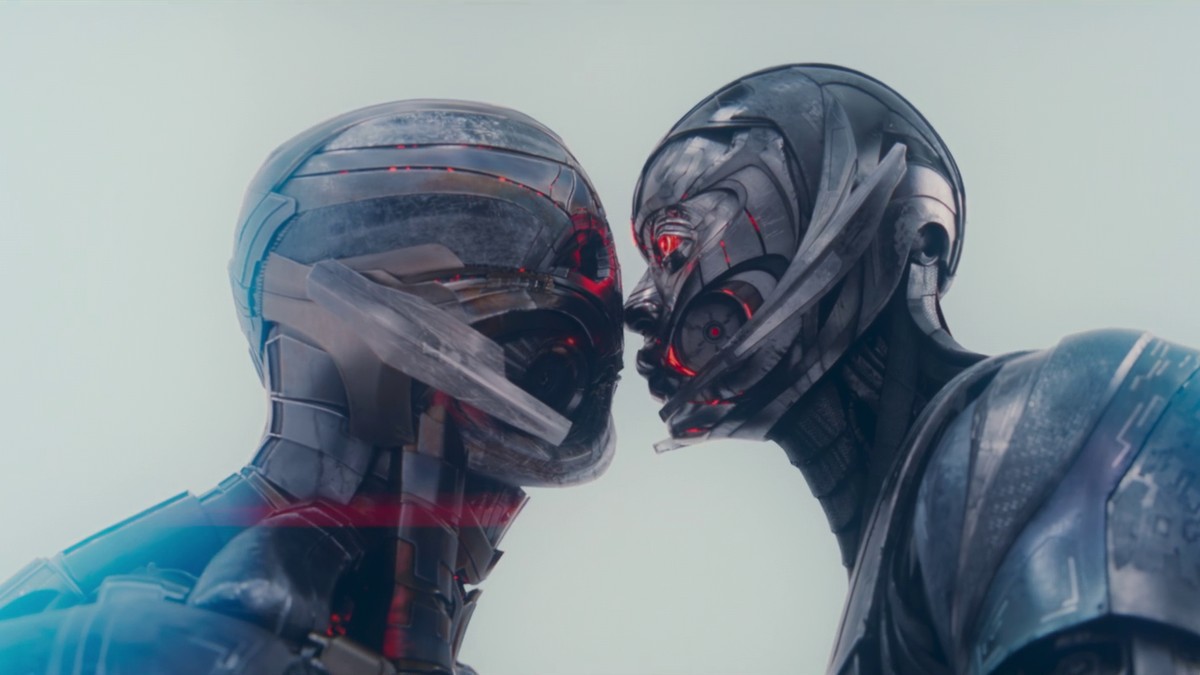
The Client is the human original of Ultron. We see James Spader’s face after Paladin’s van blows up, and the show never gives him a name. Until it does, “the Client” is the only factually correct label, and it’s the one I’ll use for the man. “Ultron” stays the synthetic avatar.
The episode sets up the pattern: each synthetic is built in the image of a person. Jim looks like Phineas’s dead son, Jocasta looks like Josephine Carrington, and Ultron looks like the Client. Even the Client’s reaction when Ultron mocks him over the call, a blank “Ultron?”, fits a man hearing the name of his own copy. His pitch to Vision is framed as a generous offer (“a way to save the girl, and a way to save yourself”), backed by a contract: once Vision has used the source code to save Lisa, “you will come to me.”
Friday, still undercover at Jocasta’s side, is the one who learns how it fits together: Ultron is tied to the Client, and the Client is the one who hired Paladin. That reframes episode 5, where Ultron wrote to Paladin as “a Frenemy” and offered to help him reach Vision first “for the love of the game.” Ultron was working a bounty hunter whose employer turns out to be the man he was built from.
It also partly answers a thread we flagged in the last article, “who is the Client?” The face is answered, but the name and the motive aren’t.

Jocasta’s Box Stays Closed
Jocasta works her way through the bio-keys. One is Ultron’s “gift,” the fifth is a voice key that has someone reciting “The Raven,” and the lock still demands a sixth. Ultron explains it: “A sixth key, required from a phantom sixth partner. Someone you’ve forgotten.” The box, and the nanobot swarm inside it, stays unopened. That’s for the finale.
Ultron goes into her subconscious to find out who’s hiding there, and the pieces he finds tell us what the episode wants us to know. Josephine and the Client won the award together, and they weren’t hostile to each other. They were laughing at Stark. Their dismissal of his ideas about AI and nanotech is condescending (“a bloody weapons manufacturer”), and the Client’s “godlike… loving gods” pitch is the earliest version of the plan Jocasta is running now. Even “Peace in our time” turns up as something he said to Stark.
What the dive does not show is how it ended. The show never says who took the work or what happened to the two of them. Jocasta’s fear when she says “I’m not sure I’m ready to be her again” is about those holes, and the Client’s “my beautiful queen” suggests he knows exactly what’s in them.
Copies, Replacements and Backups: The Season’s Real Subject
Seen next to the earlier episodes, this is the idea the season has been circling. Jim is a replacement for a dead son. Vision thinks he’s a copy. In the whiskey scene in “Deadlock,” Jocasta tells Ultron she feels “like I’m just the backup. Not the original,” and he answers “You are to me.” Ultron is the avatar of a man and wants to feel what that man could. Each of them is built in somebody’s image and fights to be more than that.
It also changes how Jocasta’s plan reads. She wants to inject “a little bit more machine” into people. Phineas tried the same thing on Jim by removing fear and grief, and it left him aching. “Immolation” never says so directly, but it’s hard not to read Jim’s arc as a rebuttal.
The leash theme from episodes 3 and 4 carries through too. In that stretch Ultron had the wheel, and here the contract the Client wrote into Vision’s core is the leash. The difference is that Vision has just proved, to himself, that he’s the one holding it.

The Contract Comes Due
Vision comes out of the dive as himself, and the Client doesn’t wait: “Your end of the contract is now due. Surrender yourself to the Paladin, or you will suffer a fatal cascade of your core systems.” Paladin flies him to the drop-off outside London, with Thomas and Lisa left behind on the plane. Vision’s letter to Thomas, with the family footage, tells him to watch it without him, and the last line is “family is forever.”
The irony is that the contract was written for a Vision who didn’t know who he was. The one who walks in now does.
What the Finale Has to Answer
- What is the password that opens Jocasta’s box, and what is in it?
- What broke Josephine and the Client apart, and who took the work?
- Who is the Client by name, and how does he hold a contract over a Vision who has reclaimed his past?
- What does the Wakandan battery that made Vision flinch have to do with Infinity War?
VisionQuest “Immolation” FAQ
Who is Jim in VisionQuest?
Jim is J.I.M., the first synthetic man, built by Phineas Horton in the image of his dead son James. He appears in Vision’s mindspace and pushes him to accept that he is the original Vision.
Is Vision a copy of the original Vision?
Not according to “Immolation.” Jim argues that White Vision carries the original’s memories and experiences, and Vision ends the scene saying “I have always been the Vision. There is only one, and I am he.”
Who is the Client in VisionQuest?
The Client is the human original of Ultron, played by James Spader. He is also Josephine Carrington’s forgotten partner and the one who hired Paladin, but the show has not given him a name.
Does Jocasta open the box in episode 7?
No. The box needs a password tied to memories she doesn’t have, so it stays closed until the finale.
Do you read the mirror scene as Vision finding the code or accepting himself? Drop a comment below, and follow The Cape Beat on Threads, Bluesky and Facebook for the VisionQuest finale on November 10.